Sunday, 26 April 2009

The Notion of Postmodernism


The term 'postmodern' was infact established in the 1960's when people gradually became dissatisfied with architecture of the time, and so founded 'postmodern architecture'. It has now however crossed-over into many realms of art, culture, media, film and music and has become a renowned term for society's evolution, through economy and culture since the mid 20th Century. It can also be defined as, 'a view that social and cultural reality, as well as social science itself, is a human construction.' (www.oregonstate.edu/instruct/anth370/gloss.html)

Modernism looked forward to a future of technology and science, until the 1970's when it began to become apparent that inevitably it would be this use of knowledge and technology that could bring about our downfall. The creation of the Atom Bomb in 1945 was the original catalyst toward the pressure on society, the fear that science would kill us all. In the 1970's and 80's society was also living on a backdrop of industrial methods being used through the previous 40 years to kill people, mainly through World War II in the form of the holocaust.
After this period of anxiety, post-modernism began to emerge, it tended to look back on the past, or focus on the future in the respect to warn people about what could happen to the world if we continued to evolve. In some respect it can relate back to scare tactic films formed in the 1950's. Post- modernism lives for the moment and present day, instead of living in the on- coming 50 years. People wanted nostalgia based texts, so they could take enjoyment in the past, and not analyse what the future held, genetic engineering and terrorism being at the fore front of society's mind. Post- modernism looked forward to the future to redeem the present. 'Blade Runner' released in 1982, was directed by Ridley Scott, can be stated as one of the best examples of a post-modern film narrative. Genetic engineering is the theme felt through-out this film, it has gone so far as to create cyborgs, now 4 have hi-jacked a ship and plan to return to earth to seek out their maker. The main protagonist Rick Deckard (Harrison Ford) must stop these hi-jackers by placing them in 'retirement'. The film is set in Los Angeles, now a cultural melting pot, which suffers from constant rain. It is depicted in dark tonal lights, and is depicted with slight film noir undertones. It shows the audience a vision of the future, not in a utopian view, as many post-modern films of the time were, but more dystopian. The main theme that runs both through Post-modern texts and 'Blade Runner' is that of the real becoming the un-real. This makes the audience question themselves as to which characters are cyborg replicants and which human, some of these identities will never find out and have to draw our own conclusions. Another underlying theme was the rising Japanese culture, Japan was fast becoming a leading economic country, and this is prevalent in 'Blade Runner' in the first scene where we meet the main protagonist, we see him sitting in a sushi bar, with a gloomy background but bright neon signs surrounding him. It was the era in which Sony was mastering the world, and this anxiety is portrayed through-out the whole narrative.
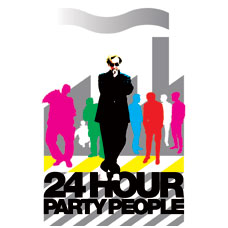
It can be said that one of the first examples of post-modernism, was seen in 'The Fresh Prince of Bel-Air' a 1980's American television show starring a young Will Smith. On frequent occasions Smith would turn to the camera and either talk directly to the audience, this showing that the character knows it is a just a television show as do the audience, this technique has followed in many other films such as '24 Hour Party People' (2002), where Steve Coogan's character Tony Wilson, often narrates the plot directly to the audience by looking straight into the camera.
There have been many discussions that state what post-modern is, or has become, however there is also the debate whether we have no left modernity, and it has merely divulged into a further level of modernity.

'Has modernity really come to a close, or has it simply undergone a change of appearance? Do the global spread of information-systems technology, the pervasive influence of the mass media, and the deindustrialisation of Western economics signal a permanent shift in the course of culture and society or can they be accounted for as part of the logic of modernity itself?' (The End of Modernity, Gianni Vattimo: 1988: xi)

This take on the post-modern is one that could never truly be understood, but I believe that because society has moved forward, and evolved diversely, since the days of modernity, where films would depict what we could look forward to in the year 2000, we now show an increasingly number of media texts, looking into the past for answers as to what is happening in present day, but also what could happen if we carry on the self-destructive path.
Post-modernism can be divided into 3 categories, fragmented, superficial and ahistorical. While fragmented can be defined as, broken into parts, lost unity and disconnected, this can directly relate to the post-modern in the sense that, many of the film texts produced because of the post-modern era, were not of the same genre, many transgressed into re-working past successful genres, as people sort comfort in the past because the future was intimidating and foreign, they did not follow the same generic conventions as films made through modernity did. Fragmented post-modernism is summarised in the following statement;


'Postmodernism deflects attention away from the singular scruntinising gaze of the semiologist, and asks that this be replaced by multiplicity of fragmented, and frequently interrupted, 'looks'.' (Postmodernism and popular culture, Angela McRobbie: 1994:13)


The films did not unify in showing one single portrayal of society, instead we saw many different images, which could shape our opinion. Fragmented could also be used to describe the multiple techniques used in post-modern texts, for example, Adult cartoons such as 'South Park' and 'Family Guy' are known for referencing past events in there narratives, and then acknowledging a common joke between animation television shows of this time, that the character do infact know they're on a television show. In episode 3 of season 10 of South Park, there is a reference to a current affair, surround the debate about showing pictures of the prophet Mohammed, The South Park characters are discussing the morality of this topic when one says to another 'How would you like it Kyle, if there was a cartoon on television that ripped on Jews all the time.' This infact is an inside joke to anyone who follows the show, as South Park is constantly satirising and making anti-semetic quips through the character of Eric Cartman. At the same time the other characters appear to look at him, in a knowing expression, that they appear on that very television programme, and are aware of the irony of that last statement. However the technique of parody and referencing has become a common trait of postmodernism:

'Parody-often called ironic quotation, pastiche, appropriation or intertextuality- is usually considered central to Postmodernism, both for its detractors and defenders.' (The Politics of Postmodernism, Linda Hutcheon: 2002: 89)

Family Guy is infamous for its parodical nature and intertextuality features, this has drawn both acclaim and criticism, most notably from fellow animators, Trey Parker and Matt Stone, the creators of South Park. Parker and Stone are well known for referencing their competition, in the episode "Simpson's Already Did It", a character discusses how The Simpson's has been such a long running show that many possible plot ideas have already been used. Towards the end of the episode the animation style changes to a hybrid between the traditional South Park style and that of the Simpson's. Parker and Stone have diffused this by stating they were paying homage to the Simpson's, not mocking it. While good natured parody has taken place on all three of the leading adult cartoons, it has also been highly negative, culminating in a two part episode entitled 'Cartoon Wars', where through Eric Cartman, Stone and Parker explicitly state why they believe Family Guy doesn't deserve the praise it receives. He argues that the frequent 'cut away' scenes in Family Guy are an example of poor writing and the praise the programme receives from many quarters is undeserved. In the episodes, Eric Cartman travels to Los Angeles in an attempt to convince television executives to cancel Family Guy due to the furor over them airing an image of the Muslim prophet Muhammad. While the episodes are highly critical of Family Guy, they are also self-parodical, as explained above, and when a defender of Family Guy states "at least it hasn't got all preachy with messages", a reference to South Park's frequent social commentaries and episodes based on current events. During the Cartoon Wars episode, in a further parody and possibly an indication that Simpson's creator Matt Groening shares the duo's feelings, the Simpson's character Bart Simpson teams up with Eric Cartman in attempting to cancel the programme. While Simpson is never named, and appears in the South Park character form, the character shares many catchphrases, mannerisms and looks with the original. Such blatant criticism of a television programme in another is rare and is an indication of how television is becoming more self aware and critical of other's work, something that would be previously unthinkable for fears of offending or segregating an audience.
Ahistorical, meaning unrelated to history is central to postmodernism; this is displayed most prominently in 'Blade Runner'. The film is set in LA in 2019; however the style of the cinematography is very similar to that of film noir detective narratives seen in the early 20th century. When broken down to the basic plot structure that is all the Blade Runner narrative seems to embody, a detective narrative. The lighting has a shadowy aspect to it, often the characters appears in darkly lit scenes, even though the world is suppose to represent the future, and a new technological era. In outdoor scenes, we can capture images of brands such as 'Coke-Cola' and 'Atari', high sky-scraping buildings with neon advertisements on the side, dominate the landscape, but yet the city still feels gloomy, and acid rain falls all day and night after the nuclear war. The misc-en-scene has a distinct capatalist aura, the fear of not being able to escape comsumerism, and constantly being harrassed by advertisements, on every free building or wall space. All these key iconographical features add to the prominent techniques, taken from the 20th century but being used on a definite 21st century narrative.
'Blade Runner gives us not a key to the future- Science Fiction only teaches us about our present.' (Images at War: Mexico from Columbus to Blade Runner (1492-2019), Serge Gruzinski: 2001: 1)

Although 'Blade Runner' is relating to the future it does not reflect on what has happened in modern society, merely what could happen to the world if we carried on in this capitalised consumer society. We see no examples of tradition, or past historical events, it appears everything has been glossed over to seal in this new technological era. Modernity was looking forward to a world of technological and scientific advances, but after nuclear warfare became a true threat, people wanted to seek comfort in a lifestyle they could be safe in. The film has established itself for a noir revival, rejuvenating old techniques, and setting them to a futuristic backdrop; it provides a generic world city. The very essence that it uses old noir instinct in its conventions is a function of postmodernism.
'Blade Runner' also uses many religious and biblical references, which relate to ahistorical postmodernism, using the old culture on a new one. 'Blade Runner' searches for new technology, of the environment and society by delving into religious symbolism, classical drama themes and the previously mention film noir techniques. The tension between the past, present and future is apparent here, reflected in the high tech advertisements and sky scrapers and then contradicted in the down-town slums and decay.
Ahistorical Postmodernism can also be seen in the previous examples of 'South Park' and 'Family Guy', although they appear to be set in present day, they have more scope for an ever changing time scale. Special episodes are made depicting the future through their satirical vision, but also and more frequently the past is depicted. A common factor in postmodern texts as has been discussed before, people could be nostalgic in a view of how the world once was before modernity, or even take joy in the simplicity of technology compared with present day. The most prominent example of the futuristic approach to post-modernism would be 'Futurama', created in 1999 by Matt Groening (also creator of world renown 'The Simpson's.) it shows a New York pizza delivery boy 'Philip J. Fry' cryonically frozen on New Years Eve 1998 and revived 1000 years later. The main narrative depicts him in this new life, astonished by new technology, and a more diverse human race than could ever be imagined. This is of course then used in humorous consequences for Fry, as he acquaints himself with his new surroundings, friends and situations. The series can be interpreted as postmodern also due to the amount of parody and satire used, which was also a staple of Groening's other works. Its vantage point is of a futuristic setting, therefore allowing a large degree of creative freedom not only when looking at today's society, but also at what may have happen in the next thousand years.
Postmodernism is a concept and understanding of social change, based on a world of generic engineering, and high influenced technology. In 'Blade Runner' however as society has already evolved into a mix of Western, Hispanic and Asian iconography as well as the people themselves, the themes that run through the film are ideas based more around identity, and the superficial. Blade runners can identify a 'replicant', or cyborg, through merely distinguishing fatal eye tremors under duress when they are being interrogated. However as Deckard (Ford) comes to learn, this superficial view on people is not what society should be based around, he learns this from falling in love with a replicant, namely 'Rachael'. This has been analysed as a new realm of seduction in modern film theory;

'In Blade Runner, all the characters are driven by the need to know about their status of life, of its duration and its relationship to the qualifications of the human and non-human. It may seem odd to describe this as seduction, for it would appear to be more about existence. But the way life itself is estasblished in the film makers it a seduction rather than a necessity of subjectivity.' (New Developments in Film Theory, Patrick Fuery: 2000: 172)

The life and interaction of human beings is the subject in 'Blade Runner', and it is the subtle intricacies that we as humans enjoy that seduce the replicants into thinking they too are human beings. After Deckard's first encounter with Rachael, she follows him to his home to ask him more questions about why he believes her to be a replicant. She has been acknowledged as being a human by her creator and led to believe through an elaborate back story and memory implants that she is indeed one of us. She grasps onto photographs she believes are of herself and her mother to justify her reason for living. He scuppers all her preconceptions about her identity, leaving her distraught that her 'Human' existence is nothing more than a lie.
The need to know about ones own identity, brings about differences in society. A community that has now in a new world based itself on diversity and the merging and coming together of the races we know today, is picking out individuals for being Replicant, and has somewhat been criticised as a form of racism. However, humanity had created these replicants in the future existence featured in Blade Runner, and so has to take responsibility for their damage. It is the age old fear of technology over powering the world, something created by humanity to be better than it, but then losing control over the powerful being. It is this notion that man will lose its place as the dominant species that drives the movie, and the science fiction genre onwards. Superficial, meaning 'on the surface' or 'not invasive' can be applied to postmodenrism in the following sense;

'These changes are not signs of the emergence of some entirely new postindustrial or postcapitalist society; they are merely shifts in surface appearance.' (Identity, Culture and the Postmodern World, Madan Sarup: 1996: 94)

Superficial postmodernism plays an equal role in 'Blade Runner', the films revolves around the need for the replicants to fit in, to be more human that human beings infact are. And this inevitably is their downfall.

'Because it is through the eyes that replicants are revealed in 'Blade Runner' as not being human, then other parts of their bodies must not give away this secret; their skin acts more like skin than the skin of humans.' (New Developments in Film Theory, Patrick Fuery: 2000: 172)

In the final scene, before 'Roy Batty'- the leader of the hi-jacking replicant crew- is 'retired' by Deckard, we see lighting techniques portray his skin to be infact more responsive than that of Deckard's, he sweats, spills blood and even shows a trace of a tear when he is enlightened to the world and his existence. Superficial could also be elaborated to form the concept of what is real in 'Blade Runner' there has infact been speculation as to whether Deckard's character is infact a replicant, this theme runs through-out many postmodern examples, especially that of the science fiction genre. Directors play on our imagination and speculation to understand and find answers to distinguish between real images and those which are constructed.
This has also been seen in 'Battlestar Galactica', created in 2004 and broadcast in the United Kingdom by Sky One, this Science fiction drama show mirrors many of the same themes seen in 'Blade Runner' for a modern generation. Instead of replicants we are faced with cyborgs. It bring across the theme that the human form is the enemy, but in relation to a post 9/11 society where we are seemingly encouraged to be vigilant in every aspect of our lives and the threat of terrorism or fear is always around the corner, it draws on our anxieties and fears, as did modernity in its portrayal of the future.
Postmodernism, after emerging from modernity has faced many critics, now it is said we are in a new phase, sometimes called post-post modernism, but having no specific title at this point. Audiences will always relish what has happened in history, when it is put into film formation, and society will always fear what the future holds, but this in fact is jst human ambiguity, and cultural pressure.

Tuesday, 21 April 2009

A Discussion of "Moral Panic" in a specific socio-historical context.


A moral panic is fear or anxiety within society surrounding a taboo subject such as drug abuse or underage sex; it is often fueled by a media frenzy following a tragedy or new founded research surrounding the initial subject. Matthew Wood states that,'Moral panics can occur both as novel events, or events which have been in existence within society for a long time and have suddenly become an issue of importance and concern.' (www.aber.ac.uk/media/students/mtw9403.html, accessed 15/11/07)For instance in this assignment I will focus on the case of Leah Betts, an eighteen year old girl who died after taking the drug ecstasy in 1995. Thus proving Matthew Wood's statement, as although ecstasy had been in our society and taken regularly by some for the previous 20 years, her death caused society to become concerned for other members of the younger generation and brought the use of class A drugs back into the spotlight.Moral panics are not a new concept to our society and more specifically drug-related panics have been around for the last one hundred years. There was much concern over the use of LSD, marijuana and acid in the 1950's and 1960's following a sudden advance in rock 'n' roll music in the fifties and the subculture surrounding hippies and Hollywood in the sixties.The texts in which I have chosen to analyse are the 2002 film '24 Hour Party People' directed by Michael Winterbottom and the 1999 film 'Human Traffic', directed by Justin Kerrigan. Both these films demonstrate the particular socio-historical time period in which I have chosen to focus, mainly club culture, rave culture and the urban use of drugs including ecstasy.'24 Hour Party People' is the basis for which this culture transgressed across the country and indeed the world, where as 'Human Traffic' focuses on the lives of five friends and their weekend of drug taking, parties and their relationships with one another, their respective partners and their parents. Both films were produced after the death of Leah Betts, however '24 Hour Party People' is a biopic, set between the 1970's and 1990's, during the original ecstasy escapade.Leah Betts was eighteen years old when she died from taking one ecstasy tablet during a night out in Essex. The media attached themselves to this tragedy and fueled the panic that already surrounded drug use in Britain. Stanley Cohen adopts this theory in the following statement;'The student of moral enterprise cannot but pay particular attention to the role of the mass media in defining and shaping social problems. The media have long operated as agents of moral indignations in their own right.' (Stanley Cohen, Folk Devils and Moral Panics: The creation of Mods and Rockers, 1972:7)The media adapt and control a story of this nature to their own advantage to fuel more scandal, and control representations of youth. If there was no attention to these tragedies then in many cases the moral panics would have nothing to feed off in the beginning.Although this was not the first case of a youth dying from taking ecstasy in Britain, the media attention combined with her parents outrage and grief spiraled the incident into a nationwide moral panic. Teenagers around the country would come home from school, or after a night out and be quizzed by parents who were worried they had fallen into the wrong crowd at school or had been peer pressured into taking the class A drugs which seem so controversial yet increasingly popular with members of the younger generation, ironically often as a form of rebellion from their overbearing parents. I myself have listened to my parents talk at me, highlighting some of the issues with the 'youth of today' even though I never showed an interest in getting involved with 'those groups of people' at school or in wider society. Leah's tragic story has been through many phases over the past eight years, although the initial news outbreaks told us that one ecstasy had immediately led to her death, it later became apparent that infact this was the fourth time she has consumed ecstasy while on a night out, and it was water intoxication that was the cause of death and not the single ecstasy tablet. However to the national press and newspapers, this wasn't the story they wanted to tell, and so when the final verdict on Leah's death was announced, in traditional 'red top' media spin it only made a small corner of the middle of the tabloids.The 1980's saw a change in popular culture, as the young began to favour the synthetic, electronic dance music instead of the punk and rock music which dominated the decades prior. With this new dance culture, came the more prominent use of ecstasy, a drug associated with this culture for its reputed ability to prolong and sustain the user's experience when in a nightclub.The film '24 hour party people', made in 2002 but set around the 1970's until the 1990's, when 'Acid House' and ecstasy were at their peak reflects a time when it was bands such as the Happy Mondays that indirectly promoted these drugs to the youth market. Sarah Thornton states;'As a result, 'moral panic' has become a routine way of marketing popular music to youth.' (Sarah Thornton, Club Culture: Music, Media and Subculture Capital, 1995: 120)This theory can be applied to drug culture, as the music surrounding the rave scene was marketed due to the moral panics associated with their drug taking. But at the same time the youth who admired and followed the bands of this time could be persuaded to partake in their counterpart's activities.The film is set around the Manchester music scene, and although is one of distinct precedence now, at the time similar events could be seen though- out the country. The film is focused on the music but it also gives us an in-depth look into the lifestyles of some of the icons of the time (and some which have transgressed into present day icons) demonstrating how the youth of those decades could contract similar habits, and make rave and drug culture thrive.Mark 'Bez' Berry, an integral figure who can possibly lay claim to the reason the Happy Monday's success skyrocketed, is portrayed in the film as the drug ambassador, when the band is casually relaxing around a bar, he says, 'Can I offer anyone the best drug experience they've ever had?', Steve Coogans narration describes him as the chemist, with his favourite chemical being Ecstasy.An extract from an interview with the Happy Mondays in November 1988 serves to reinforce this image of the band and the youth market to which they appealed. Shaun Ryder says, tongue firmly in cheek;'Happy Mondays have a reputation as a drugs band. It's a subject to broach carefully, but it has to be brought up. "I don't take drugs. I'm totally against self-abuse of any kind. I don't even smoke ciggies." Shaun sits back. There's a moments silence and then the rest of the band collapse into fits of laughter.' (Stuart Maconie, NME Magazine Interview with the Happy Mondays, 19th November 1988:16)The band were the heroes of the young generation at the time, they wanted to follow their example and imitate their role models. This contributed to a surge in ecstasy in the late 1980's.Although the film '24 Hour Party People' does not demonstrate to us a specific fear of moral panic surrounding ecstasy, it is a prominent subplot through-out the film, so much so that the tagline shown on promotion artwork nationwide was 'Share the Ecstasy', a double entendre for sharing the excitement around the music scene of the time, but also sharing the drug that was in widespread use. The film is a firm basis for any understanding of society in that era when ecstasy really began to influx into the streets and clubs of Britain.A later scene in the film shows us that ecstasy however rife through the Hacienda was a mere stepping stone onto other more extreme moral panics that lay ahead. The scene depicts images of the Hacienda nightclub, ecstasy and drug dealers with plenty of money made from selling drugs to the population of the 'Madchester' scene, the narration, again by Steve Coogan (playing Tony Wilson-head of Factory Records and emissary of the movement) talks the audience through the vicious circle of the unknowing contributors to the demise of the Hacienda. Drug dealers would push ecstasy through-out many club nights and gigs at the Hacienda, consequently meaning that the users would not be purchasing alcoholic drinks from the bar, and so Factory lost out. The drug dealers were the ones to benefit from the club goers seemingly insatiable thirst for ecstasy and came back week upon week with more drugs and eventually brought gun crime inside the Hacienda doors. This then inevitably led to the closure of the nightclub, after a fatal shooting and too many near misses, setting in motion much negative publicity surrounding the youth market and their particular habits of the weekend. This growing wave of public opinion pushed further the closure of the Hacienda, stripping the youth of Manchester and many neighbouring areas of their escapism from the suppressive government and will enforcers.The government's public image at this time was at an all time low, particularly among the youth who saw Thatcherites as trying to stifle their weekend activities. An extract from an article in the Guardian newspaper on January 16th 2004 demonstrates this;'Then, in 1988, during what became known as the second summer of love, ecstasy seemed to have found its spiritual home in a flagging Thatcher's Britain. The nation's youngsters began to congregate in their thousands in fields and warehouses. In acid house they had their music, in fluorescent T-shirts and smileys they had their fashion, and in ecstasy, at L25 a pill, they had their drug.' (http://www.guardian.co.uk/g2/story/0,3604,1124163,00.html Accessed 08/12/2007)The reference in this extract to a flagging Thatcher's Britain is poignant to the historical context due to the youth reveling in the seeming demise of the country under the iron grip of the Iron Lady. The economy was in crisis and government institutions were being sold off contributing to the low moral of society, however through-out times of despair the youth seemed to thrive. They were past feelings of negativity and had moved on into a phase of euphoria fueled by ecstasy. MDMA has been produced since around 1914, and coming through Britain for just under one hundred years, however it was the summer of 1987 that first saw the widespread use of the drug. It is often referred to as a 'weekend' drug by its advocates because the users will only take ecstasy when out on a Friday or Saturday night, rather than keep it in constant use.This particular view of ecstasy is best illustrated in the 1999 film 'Human Traffic'. Although the film demonstrates the perceived positive points to taking ecstasy, and does not necessary reflect on a moral panic, unlike fellow British film 'Trainspotting', for example, the characters do not have to face the consequences of their drug taking - demonstrated by paranoia, hallucinations and lack of logical thought - and instead seem to benefit from their weekend of clubbing, and getting 'wrecked'. A scene at the start of the characters weekend demonstrates the drug and dance cultures philosophy on what is ahead and the referenced weekend drug, Jip states;'The weekend has landed all that exists now is clubs, drugs, pubs and parties I've got 48 hours off from the world, man I'm gonna blow steam out of my head like a screaming kettle. I'm gonna talk codshit to strangers all night. I'm gonna lose the plot on the dance floor the free radicals inside me are freaking man! Tonight I'm Jip Travolta, I'm Peter Popper I'm going to never never land with my chosen family, man we're going to get more spaced out than Neil Armstrong ever did, anything could happen tonight, you know? This could be the best night of my life! I've got 73 quid in my back burner I'm gonna wax the lot, man! The milky bars are on me! Yeah!'It does on the other hand portray the parent's view of the drug, and this is seen in one of the later scenes, where the character Moff is having Sunday lunch with his family in an idyllic country setting. His father is reading the newspaper and in particularly a story about a youth who has died from ecstasy, he says 'another kid dead of ecstasy this week, I don't know what possesses them to take it in the first place.' We can clearly see Moff reeling at this statement as he himself is on the 'come-down' from taking copious amounts of drugs the night before. His mother then ironically states, 'Some children just don't have the correct up-bringing, their parents must neglect them and they turn to drugs as an escape,' cross back to Moff now looking quite bemused by this comment. His Grandmother then joins the conversation by saying, 'no discipline, no morality, no respect', his father then adding 'I just don't understand the youth of today', at this point Moff proceeds to put his head in his hands. These three people are two generations above him and presumably the audience watching the film, their comments are seen as the typical media fueled opinions of adults who don't understand their children's way of life, and infact demonstrate the exact feelings which lead to the experimenting with drugs in the first place and subsequently a moral panic. Moff not standing for any more of what he believes to be total misunderstanding of his lifestyle stands up and acclaims;'Yeah, we're just some happy fucking sitcom, aren't we? Perfect life, perfect family perfect fucking dining table, well give yourself a round of applause, please, I swear sometimes we're living on different planets because there is no fucking way of communicating with you all, who the fuck are you people anyway, who the fuck are you!'The interaction seen here between family and the younger generation is a typical scenario likely replicated throughout homes up and down the country; there has always been a struggle for power between the older and younger generations due to the misunderstandings of their lifestyle. However this has often been misconceived as is explained in the following;While working class terrace sub-culture indulging in casual drug- taking on a scale not seen since their parents did it twenty years before' (Steve Redhead, Rave Off: Politics and Deviance in contemporary youth culture, 1993: )Although moral panics arise from older generation's concern for the younger population, it is infact regrettable that many of the youth of today are merely repeating the generations before them. It does appear that the drug may change through the decades but the panic that occurs across society remains the same.This is also demonstrated in 'Human Traffic' when the two female characters Lulu and Nina, are interviewed by a news crew whilst out getting 'wrecked' in the nightclub. They clearly mock the news reporter who is likely to be a similar age to their parents, and another reminder of the elder establishment they seek to rebel against.Interviewer: Do you take Ecstasy? Lulu: No, No, well we use to, but now we just jack up heroin and float around the club. Interviewer: You take Heroin? Lulu: Well we never use to but then we saw Trainspotting and that just made us want to do it...We just seem to be so impressionable. Nina: Well it's the youth of today you see, they need older people to show them how to live. Lulu: See we learn from their mistakes, because they've been there before. Look at Jimi Hendrix, and Elvis.Of course, the audience knows that this is all fictional, and the girls are demonstrating a point, and at the same time mocking their British rival. The intertextuality is also a direct reference to the older generations view point, as when 'Trainspotting' was released in 1996, many of its critics believed it was portraying a negative way of life to the niche market it was aimed at. There was much concern from parents that it might promote the use of heroin and other class A drugs to their children. This scene in the film also directly relates to the extract from Steve Redhead cited above, the older generations may fuel the moral panics surrounding youth, but forget that many of the youth try to recreate the decades gone before them, particularly the 60's which were seen as a period of great liberation and experimentation, and ironically the period in which many parents today were young themselves. Parents are also prone to be very forgetful on how they or their peers may have lived in the 60's and 70's when drug abuse was high, through LSD, Acid and Marijuana.On the whole the texts I have analysed give a balanced depiction of the moral panics surrounding ecstasy. 'Human Traffic' does not conceal the fact that the way of life demonstrated through the characters is necessarily the same attitude, opinions and actions of every member of that generation, however it does aid the parental audience in a mild understanding of dealings of the youth of the time. It portrays all sides to the ecstasy argument, from the user's perspective but also does not discredit the older generation's state-taught opinions either. '24 Hour Party People' lays the foundation for the audience's comprehension on how moral panics such as the Leah Betts case can occur. It perceives ecstasy and the culture around it as some what 'seedy'. Although we can empathise that at this time, drug culture and the surrounding factors appeared to be a liberating revolution, in hindsight, underground raves, inebriated dancers and fatal incidents are far from the now manipulated rose tinted views of euphoric revelers. As drug use will continue to carry on through our society so too will the respective media fueled moral panics that surround even the most mundane situations

Superheroes Terminated?


A superhero is a fictional character who is noted for feats of courage and nobility and who usually has a colourful name and costume, they also obtain the powerful skills and abilities beyond those of human beings. Their occupation is saving the world and stopping all villains' intent on destroying it.Superman has dominated American comic books since his debut in 1938, many of his traits and abilities have become archetypal mainstays in comic book history. The character has influenced the term superhero and in many ways defined it. Superhero narratives range from episodic adventures to decade long sagas and in present day is seen through a range of media formations.Superheroes follow a strong moral code, including the fearless attitude to risk their own lives to save others and in the service of good without expectation of reward, these such motives include a refusal to kill. Superheroes incorporate a number of other attributes to support their alter ego. A weapon of choice seen with Wonder Woman's 'Lasso of Truth', the underlying theme that affects the heroes name, costume and personal effects. For example Batman resembles a large bat, has a bat mobile for transport and his costume also mimics that of a bat. This is often associated with the heroes own fears or an instrumental event linked to the origin of their superpowers. As seen with batman who had a childhood fear of bats. Their secret identity protects all superheroes from their friends and families becoming involved in their superhuman lifestyles.In brief they are also associated with rival villains, a headquarters or base to hide out from the public, a supporting partner (Batman and Robin) a flamboyant costume and the original motivation seen in Spiderman's 'sense of responsibility' for his uncles death, and Superman's humanitarian service and belief in justice.Originally superheroes could be found long before comic strips in newspapers and graphic novels. Many are similar to protagonist character seen in Victorian myths and even Sherlock Holmes investigations. Similar characters such as Zorro, Spring Heeled Jack and even Tarzan can be described as influences in post modern superheroes as they hide their identity with an alter-ego, originate from myths or urban legends or in Tarzans case have superhuman strength.Superman was introduced to the world in 1938, he had many of the original traits that we now associate with superheroes, a colourful costume and cape, the superhuman abilities to save the world and a secret identity, in Clark Kent. This allowed him to blend into everyday society and distance himself from his friends and family who could get hurt if his villains found out who he really was. Superman is considered the most successful superhero of all time, but he still incorporates an intrinsic difference.'The particular brilliant of Superman lay not only in the fact that he was the first of the Super-heroes but in the concept of his alter ego. What made Superman different from the legion of imitators to follow was not that when he took off his clothes he could beat up everybody-they all did that. What made superman extraordinary was his point of origin: Clark Kent.' (Jules Feiffer, The Great Comic Book Heroes, 1967: 18)This is the underlying attraction to Superman's persona, he was hiding from the world in his identity of Clark Kent, to aid him in leading a normal life. But Kent was not his true identity, it was Superman. Bruce Wayne became Batman, Superman became Clark Kent. Alter ego was the significant part to the complex of the Superhero and so Superman's success, he had many underlying themes that children reading about his adventures could relate to, adopted after his whole world had been destroyed, excluded to some extent at school, and the inevitable girlfriend crisis whether it be Lois Lane or Lana Lang. These all were involved in his episodic adventures, often becoming sub-plots and separate collections of comic books specifically related to his love interests, i.e. ' Superman's Girlfriend Lois Lane'Another aspect to the success of Comic Books in the past, which is still very much relevant in present day, is the quickly adapting storylines and diversity. This has shown through ever new superheroes, Batman, Spiderman, The Green Lantern, X-men etc...But also we are increasingly seeing women brought into Comic Books, this consequently drawing more women to read comics and so heightening the demand. Wonder Woman is now set into American popular culture but as we can see below was originally was just a novelty.'It was obvious from the start that a bunch of men got together in a smoke filled room and brain stormed themselves a super lady. But nobody's heart was in it.' (Jules Feiffer, The Great Comic Book Heroes, 1967: 45)This shows us that male artists were not really interested in making this new Superwoman. Many of the complexes involved in males superheroes were just transferred to Wonder Woman's persona, and often people perceived her as a homosexual due to her over powering masculinity. It gave the public the view that she could not be taken seriously, and often sums up Women in the comic book industry, if they were not drawn to look pretty and have relationships with other superheroes they must be homosexual. Yet surprisingly as Wonder Woman began to come together and make her mark on American society she became a world renowned sex symbol.The key to the success of the superhero comic is its ability to take the reader away from reality into unknown realms. In present day however they are criticised for not being realistic enough. The concept of comics has enthralled readers for nearly a century, its ability to switch story from issue to issue, depict a whole narrative with hardly any use of language and show intricate images page after page. All this is summarised below.'Each issue is a separate event, the revelation of a new secret about the real history of superhero literature: the connections between works that appear unconnected, the battles for literary priority, the murders that allow a given tradition to survive over its fallen predecessors and influences.' (Geoff Klock, How to Read Superhero Comics and Why, 2002: 154)This unique concept not seen in other art or literature is what makes comic books a huge part of our popular culture, although demand may die, and sales decline the exceptional difference between them and other books, novels, paintings and general literary works, makes comic books unique, no other formation can keep readers returning week after week, with the gritty plots and unrealistic narratives, our own ambitious fantasies want our superheroes to keep on succeeding.The decline of the comic book era was never specific to a period of time, it merely came about as DC and Marvel began to lose popularity, times change and the children and adults who bought the comic books, were moving on into new more exciting hobbies, comics were viewed as old and 'un-cool', there once enthralling simplicity was now not exciting enough. There are numerous events linked into the demise of comic books, The end of the silver age, DC's experimental phase and the writers and artists leaving there respective companies.In the 1950's DC Comics gain a new editor in Julius Schwartz. He recreated many of the 1940's popular heroes launching an era name the 'Silver Age'. The resurrected characters were Flash, Green Lantern, Hawkman and many others. Through the 1960's DC gathered up its most popular characters and merged them all into a mega gathering of superheroes seen in 'The Justice League of America'. Marvel challenged this by introducing the 'Fantastic Four' in 1961, a family based unit of Superheroes all with their own specific abilities. However Schwartz's comics began to lose popularity.'The general decline in science fiction had damaged it, as had changing art and writing teams. He lured Gil Kane back for a run of great issues, pairing him with fine inkers like Wally Wood and Murphy Anderson. But sales kept dropping. The avuncular chipmunk, who for fourteen years had always seemed to know his next move, was stuck. He figured it was time to learn what younger eyes might see in the character.' (Gerrard Jones, The Comic Book Heroes, 1997: 144)This shows us the feeling within the comic book houses, new younger artists and writers were being brought in, to give the youthful readers what they wanted, many of the legends of DC and Marvel were being replaced, and giving in to the call for a fresher more vibrant approach. This quote is directly relating to the once popular character of the Green Lantern. His approach to calling in Denny O'Neil to 'do something' with the comic, effectively ended the Silver Age.The decline of comic book sales can be attributed to its negative image and also the perceived effect on children and subsequent target audience due to the sometime graphically violent stories and imagery.'The only way of doing justice to any art form is to find its own proper descriptive terms. The comics combine these two different devices is one source of feelings that they are an awkward in-between art, neither purely literary nor just entirely visual. Looking at comics, it is often said, is neither proper reading nor genuine viewing; too much attention to comics is thought to be bad for children, for it keeps them from learning how to do genuine reading.' (David Carrier, The Aesthetics of Comics, 2000:68)Here Carrier forms the argument that because of the comic books more vague approach to art, it is often confused and disregarded when in comparison with other more highly recognised works. Because they have no stature in modern society as works of art, or reputable literature, parents can often misunderstand or misinterpret the morals and values it subliminally informs their children.The superhero film is a progression from the narrative of superhero comic books. Its genre is a cross breed of science fiction, fantasy and action, the main protagonist is often a superhero we are familiar with, or that has appeared at some point in history through the formation of comic fiction, however there is an exception here in Robocop, a similar style of narrative and approach but the character had not appeared in comics previous to the film.Superhero films were immediately commissioned after the success in the early 1940's of superhero comic books. They were however not million pound blockbusters at this time, and were shown on a Saturday aimed at children, starting with Captain Marvel, but Batman, Superman and Captain America also appeared in similar formats.In 1978 'Superman' became the first modern superhero film; it starred Christopher Reeve and was directed by Richard Donner. At the time it was seen as cutting edge in relation to plot lines, subtext and of course special effects. 'Superman' (1978) and 'Superman II' (1980) were considered remarkable successes through the industry and set a new mark through this genre.In 1989, The Batman comic was recreated through film; it set a much darker backdrop, reflecting the atmosphere of the original 1940's onward comics, unlike the earlier glossy television show. The costume and set design were much more elaborate and realistic to some extent, the network of Batman films grew through the 1990's until 1997's 'Batman and Robin' which is acknowledged as a serious failure in Hollywood. This could be interpreted however to have aided the genre as now directors had realised it was to be taken seriously not mocked.In the past ten years a new evolution of Superhero based film has come into the public eye. The release of 'Spiderman' heralded a new era, not only in the narrative and plots of these action base films, but also more diverse special effects. 'Spiderman II' even broke the box office gross record in the first five days of release. Many of the superhero films apply certain age restrictions due to the threatening villains and heavy action. 'The Incredibles' (2004) directed by Brad Bird, represented all a superhero film had to offer but created it in CGI technology. It appealed to both children and their parents, widening the market, there now appeared to be an option for the under twelve's.

Eisenstein on Disney


The animated cartoon is a short series of hand drawn sketches, shown one after the other to show the characters to be in motion. The animations normally feature a plot or narrative of some kind and after the silent era was often produced to music. In present day many of the animations are not produced by hand, but through computer generated imagery (CGI) which is analysed later. Disney is often described as the creator of animation and the full length animation film. There are many claims that his work is ground breaking when in fact many other directors and producers before him had created full length films, with sound and colour. Sergei Eisenstein was a revolutionary soviet film director and theorist. The book 'Eisenstein on Disney'(1986) is a literature review of Eisenstein's theoretical findings on the Disney corporation, the references to Disney are so widely used because Eisenstein did not often reference such popular culture and so to produce theorem on such low culture texts was a rarity in the war environment. The Fleisher Brothers were a Jewish family, originating in New York and became Disney's biggest rivals. If the Fleisher's had become the prominent animation studio in America then the history of animation would have been very different. They involved more adult jokes in their animation so it appealed to a wider audience. Betty Boop was their biggest success, and in some of the cartoons she appeared in, they seemed quite surreal. She is also deemed one of the few female cartoon characters who has become a universal sex symbol. The Fleisher brother's cartoons were all pre-Disney, but when the more commercial child friendly animation became popular, the Fleischer's work faded into the background. This downfall began in the early 1940's when they moved their studios from New York to Miami, mainly to produce a supposed blockbuster film 'Mr Bug goes to town'. Unfortunately when competing with Disney's qualified and trained animators this film could not contend and lost the brothers a lot of money. Consequently Paramount took over the studio and the brother parted ways in 1942.Disney was formed in 1934 at the same time that adult animation was at its peak. Disney's animations weren't successful and appeared very childish when they were first released, however after the release of 'Snow White and the Seven Dwarfs' in 1938 the studio began to form more substantial partnerships. 'Snow White and the Seven Dwarfs' was a monumental film in that it was produced entirely in Technicolor. This set off the trend for following animated films and taking into account inflation Snow White is still the number one selling film at the box office. Disney pioneered the use of multi-plane cameras in their animation work. This technique involved stacked panes of glass each with their different layers to the animation scene; it allowed the animator to re-use the foreground and so move the characters through the picture in a more realistic three-dimensional effect. Following the success of these films Disney branched out into other operations such as television and theme parks, making Disney one of the biggest profiteering companies in the world and bringing his much loved characters to life. This is in keeping with Eisenstein's theory on Disney's visionary thinking, his power in which to capitalise on the popularity of his early works and can still be seen through-out the Disney Corporation today. By diversifying into other areas of commerce he also expanded his creative works as many of the rides featured in the theme parks were turned into feature films and vice versa.Disney's 'technical means' can be seen through-out its long history of achievements. As stated before these were such things as the first feature film in Technicolor seen in ' Snow White and the Seven Dwarfs', also, the first major motion picture with stereophonic sound, seen in 'Fantasia'. But Disney's techniques went further than this, as can be seen in the following,'Disney moved further away from plasmatic flexibility of many of the early Silly Symphonies and coerced the animated form into a neo-realist practice.'(Paul Wells, 1998:23)This shows the complexity of Disney's animation process, and how the process has changed through time to keep up with audience expectation. Films as a whole have to change through time so that the audience will be interested in new and up coming releases, this is true of animation as well. The general look and style of the films is always evolving but the moral stories normally stay the same.The audience is a key component to Disney's success. Disney films have a wide appeal, across varying age groups, not necessarily exclusively the intended age group can enjoy these films. The plots are layered but without being over-complicated, this is why many of the films follow traditional fairytales.'Disney animals were simpleminded figures of fun, the cartoon children prepubescent and brimming with harmless mischief. When real trouble occurred, it was the fault of outside agitators, or of some mechanical device dragged into Eden.' (Stefan Kanfer. 1997:58)This example relates to the target audience, the children featured in the films are of similar age to the audience, and the harmless fun represents a respectable moral conduct for the children to follow. Disney also showed us the childish interpretation of the world, and constructed within the film a safe environment for the imagination. This also showed Disney's ability to tap into the psyche of the audience, by using the childish protagonists that identify with the audience, and the simple and easy to follow narratives that keep the attention of the audience, all proof that Disney had an outstanding knowledge of his audience and could pay attention to the images, ideas and feelings of the viewers.Throughout the history of Disney's animation studios a number of common themes and values can be identified. These include the triumph of good over evil and the protagonist often overcoming obstacles with the odds stacked against them. These themes are prevalent in the pictures 'The Lion King' (1994) and 'Aladdin' (1992). These are two of Disney's highest grossing and critically acclaimed pictures and were released during the boom period of Disney animation in the early 1990's, which also included 'Beauty and the Beast' (1991) - which was the first animated film to be nominated for the Best Picture award at the Oscars. It appears during this period that Disney found the formula of a male protagonist overcoming seemingly insurmountable odds and replicated this in several of their films. It should be noted that once Disney attempted to introduce a new plotline in the late 1990's with pictures such as 'Mulan'(1998) and 'The Emperor's New Groove'(2000), a downturn in fortunes followed. This formula was extremely successful as it is something all of us can associate or identify with, as we all seek to better ourselves or achieve the unachievable. They also strongly appealed to our sense of idealist in our personality, as both feature a strong male who has been held back or forced into the shadows by a wicked older figure who previously acted as a mentor.This betrayal of trust and injustice appeals to the good within us as we encourage the protagonist to claim what is rightfully theirs. Disney, and in recent years the writing team that has carried on his work after his death in 1966, knew exactly how to appeal to people's good nature and created heart warming tales that always ended in a positive way for the protagonists. Therefore this encouraged the whole family to visit the cinema, as they can be assured of a feel good picture with no danger of upsetting or distressing younger viewers.'The success of Toy Story (1995) created a 'professional' aesthetic for CGI which, while not creating an 'orthodoxy' for the form nevertheless confirmed the potential of the medium by fully exploiting its distinctive credentials.' (Paul Wells, 2002:13)Disney's partnership and later acquisition of Pixar opened the floodgates for a new wave of animated cinema, giving a much needed shot in the arm to an industry that had been in severe decline towards the mid to late 1990's. Disney had failed to attract the same critical response in pictures such as 'Atlantis' (2001) and 'Mulan' (1998), illustrating the receding fortunes of Disney's once tried and tested animation picture formula. Their first collaboration was Toy Story (1995), which attracted a new audience to the flagging Disney brand and revitalised the company's fortunes in the process. This was the beginning of a long and fruitful relationship between the companies, as they enjoyed a close working relationship as Pixar continued to produce box office smashes for Disney Corporation including 'A Bug's Life' (1998) and 'Monsters, Inc.' (2001). Pixar dealt a potentially devastating blow to Disney in 2004 when it announced that it was severing ties with Disney and intended to publish its films itself - hugely increasing their revenue as they had a seemingly bankable stream of films in production. Relationships between the two companies had been strained since 1999 when Disney refused to release Toy Story 2 in pictures - thus deeming it not one of Pixar's five films they had agreed to produce for Disney. However in 2004 Disney ended all the speculation by completing the purchase of Pixar for approximately $7.4bn, catapulting Pixar supremo Steve Jobs onto the board of Disney directors and the majority shareholder. Pixar's fusion with Disney means a change through-out the industry for CGI produced animations, with the two biggest animation studios combining, Pixar the pioneers of CGI technology and Disney the original leaders in family entertainment, increasing their stranglehold over the industry. In recent years a number of rival animation studios have made the transition from hand drawn cells to computer generated imagery, with varying degrees of success. DreamWorks production of 'Shrek' and 'Shrek 2' has seen a change in animation that captures the interest of adults as well as their children. Involving more adult humour and intertextual references to films not associated with the usual animation target audience. However in the last 12 months attempts at replicating the Disney formula have failed at the box office, notably 'Chicken Little' (2005) and 'Hoodwinked' (2006). 'Chicken Little' was a Disney produced CGI film, that was met too much criticism and no doubt played a part in Disney's decision to acquire Pixar into their assets.In conclusion, Disney's excellent management skills, and ability to give the audience film after film of family friendly narratives produced the company billions of dollars in profit, and also worldwide recognition as the leading animation studio, with the most achievements and acknowledgments. The unique charm of a Disney film has become known worldwide, and the release of a major Disney picture has become a global event, in a way no other production can compare with. Therefore I agree with Sergei Eisenstein's view that Disney could read the inner most thoughts of the human mind and manipulate these when creating many of his pictures.

Thursday, 11 December 2008

The Products of Hollywood during The Cold War


During the 1950's many of the films produced in Hollywood were either scare based films on a seemingly inevitable attack from communism, or could be explictily defined as Russians fighting Americans.'Invasion of the Body Snatchers' (1956) was one of these scare movies. The underlying themes can be seen in characters such as the 'pod people', who are invading the small town of Santa Mira and come from a different planet and replace the town's citizens with identical, monotonous drones, a blatant metaphor for the infiltration of communism into the white picket fenced communitys of surburban America. Other themes can be depicted through the satirical paranoia that surrounded the early years of the Cold War especially during the era of the HUAC.The narrative to 'Invasion of the Body Snatchers' illustrates Communism as an prevalent threat, reflecting the climate of this period of the Cold War.Two years previous to its release, CBS paid Ian Fleming for the rights to adapt his novel 'Casino Royale'. James Bond made his debut in the television programme 'Casino Royale' in 1954 . The brief narrative see's the secret agent (James Bond) who works for the British Secret Service, facing a powerful high-rolling Russian operative called 'Le Chiffre'. The themes of fighting the spread of communism are evident here. Although the operative does cause a threat to the safety of many, it was the beginning of Russians and many other known enemies in the antagonist character role. However James Bond is a British character, and so perhaps this plot and subsequent films to follow, can be adapted to the idea that if the Cold War ever diversified into a war of conflict, it might act as a rallying cry for other nations to allie themselves with America.On the back of significant events in China, after bombing Quemoy, and with the Cuban revolution evolving into guerilla movements across Latin America, America saw the release of an epic momumental film. 'Ben-Hur' was released in 1959, starring Charlton Heston and Jack Hawkins, the brief plot outline see's the tale of a Jewish prince and his fight to revenge the alleged attack on the governor, something he is committed of and thrown into the gallerys for. The film shows action of Christians fighting Romans, however some have perceived the Christians to be American and the Romans as Russians. This putting a whole new aspect to the film.Similar to the theme of James Bond, it shows a literal conflict between the two superpowers, also a motivating and inspiring ambience portrayed to the audience, depicting the strength of the American side. To have a major mainstream film, which was so welcomed by the usually conservative Academy Awards, shows us that even Americans large institutions supported the campaign on Communism.'The Manchurian Candidate' is a film adapted from the 1959 thriller novel written by Richard Condon. A Cold War thriller, it was directed by John Frankenheimer and starred Frank Sinatra, Laurence Harvey, Angela Lansbury and Janet Leigh. The central concept of the book and the subsequent 1962 film is that the son of a prominent political family has been brainwashed into becoming an unwilling assassin for the Communist Party. The film had its national release on Wednesday, October 24, 1962, at the height of the Cuban missile crisis, thus it's content was highly controversial and bordering radicalism at the time of its release.Continuing with the theme of this assignment, it shows the threat of communism rather than the fight to contain it. Putting America in an uncomfortable siutation as it once again showed what could happen if they did not act faster. One year later John.F.Kennedy was shot by an assasin, although the shooter was never identified as Russian, there were many conspiracy theories linking numerous enemies of America to the murder. The film was then banned until the 1980's when it was re-released and noted for the courage of the producers in the powerful narrative. Since its re- release there has followed a remake starring Denzel Washington in 2004.'A chapter of the American Legion in southern California declared the film was proof that communists again were infiltrating the movie industry and called for renewed investigations of Hollywood by the House for Un-American Activites Committee (HUAC). When 'The Manchurian Candidate' opened at one theater in Orange County, California, Communist party members found themselves picketing the movie alongside anti-communist extremists from the John Birch Society.' (Paul Monaco, The Sixties, 2001: 171)This illustrates how nearly twenty years into the Cold War, anti-communist feelings were still rife through the movie industry. America still felt unsure of who was trustworthy, something which only worsened with the assasination of JFK. The Cold War had become a vast and lengthy crisis through America, and with more turbulent times ahead in the form of the Vietnam War, the atmosphere surrounding Americas foreign policy could only be fueled more so by Hollywood.'Dr.Stranglove, or: How I Learned to Stop Worrying and Love the Bomb' (1964) is an adaptation of the Cold War thriller novel ' Red Alert'. The film directed by Stanley Kubrick, is a black comedy based around the fragile nature of the Cold War and the doctrine of mutual assured horrific ending, if either launched nuclear missiles. In 1989 the film was deemed 'Culturally Significant' by the United States Library of Congress/ The film saw a delay as it was was due for previews on November 22nd 1963, the day JFK was assasinated. Subsquently they postponed the event until January 1964, in sympathy towards the public and the Kennedys. The main themes of the film are satiricalising the point that if either country (America or Soviet Russia) launched an attack it would inenvitably be the end of humanity.'The script's broad humour, along with Kubrick's uncanny skill for integrating the bizarre into an underlying and pervasive aesthetic of realism, pointed toward comedy and irreverence that delighted student- ages audiences. 'Dr.Stranglove' brought what some critics labeled as 'sick humour' directly into the mainstream of the American commercial cinema.' (Paul Monaco, The Sixties, 2001: 172)Because the conflict was developing into a physical war in Vietnam, anti- war feeling combined with the 'hippie' movement grew stronger thus filmmakers were no longer afraid to demonstrate the Cold War in a more casual manner. Although some of the themes evident in 'Dr.Strangelove' were true, the techniques and surrealist nature of the film provided a much more laid back approach to Cold War depiction, yet still maintaining a respectable position in Hollywood.From 1965 onwards, emphasis on the Cold War waned, and filmmakers began to produce more material on the Vietnan conflict, such as, 'Apocalypse Now'(1979) and 'Full Metal Jacket' (1987). However towards the latter period of the US-Soviet tension, which coincided with the fall of the Berlin Wall and radical reform in Eastern Europe, filmmakers once again toyed with the fundamentals of the Cold War conflict. This can be seen in 1980's re-emergence of Cold War idealogies such as in, 'Rocky IV' (1985) where the titular Rocky takes on and ultimately defeats Soviet boxer Ivan Drago, who is represented as a cold, characterless machine, which shares similar themes with 'Invasion of the Body Snatchers' where everyone is devoid of characterisation.'The pressure on Hollywood as a system started, then, in the 40's but it was not until the 60's that it introduced a real change in popular culture. There is today a different pattern of consumption that had brought a more varied distribution system into operation.' (Lawrence Alloway, Violent America: The Movies 1946-1964, 1971: 22)This statement directly links with present day reflections on war and its place in film. For instance with the current occupation of Iraq, we do not necessarily see numerous film narratives depicting it. Due to sensitivity values and discent among the American people, there is no need for propaganda based films, as it is portrayed to us through news media outlets. However in rare occurances where modern conflict is illustrated such as 'Jarhead' (2005) based on the events leading up to the 1991 Gulf War, it is promoted in a positive light and shows the American protagonists as heroes.As America and the rest of the world face ever more terrorist threats and warfare, films and television are constantly being produced to promote or demote America's foreign policies, however since the catastrophe of September the 11th, government bodies and Film Institutes are rationalising what they broadcast through Hollywood.Where as in the period of the Cold War, filmmakers were quick to react to the crisis through the medium of film, in present day we are more reserved in the depiction of current war as it is seen as somewhat insensitive to victims and their families but also the abundance of information at our disposal through internet, television, newspapers and radio makes these films irrelevant by the time they are released.

Drug Use in '24 Hour Party People'...


The film '24 hour party people', made in 2002 but set around the 1970's until the 1990's, when 'Acid House' and ecstasy were at their peak reflects a time when it was bands such as the Happy Mondays that indirectly promoted these drugs to the youth market. Sarah Thornton states;'As a result, 'moral panic' has become a routine way of marketing popular music to youth.' (Sarah Thornton, Club Culture: Music, Media and Subculture Capital, 1995: 120)This theory can be applied to drug culture, as the music surrounding the rave scene was marketed due to the moral panics associated with their drug taking. But at the same time the youth who admired and followed the bands of this time could be persuaded to partake in their counterpart's activities.The film is set around the Manchester music scene, and although is one of distinct precedence now, at the time similar events could be seen though- out the country. The film is focused on the music but it also gives us an in-depth look into the lifestyles of some of the icons of the time (and some which have transgressed into present day icons) demonstrating how the youth of those decades could contract similar habits, and make rave and drug culture thrive.Mark 'Bez' Berry, an integral figure who can possibly lay claim to the reason the Happy Monday's success skyrocketed, is portrayed in the film as the drug ambassador, when the band is casually relaxing around a bar, he says, 'Can I offer anyone the best drug experience they've ever had?', Steve Coogans narration describes him as the chemist, with his favourite chemical being Ecstasy.An extract from an interview with the Happy Mondays in November 1988 serves to reinforce this image of the band and the youth market to which they appealed. Shaun Ryder says, tongue firmly in cheek;'Happy Mondays have a reputation as a drugs band. It's a subject to broach carefully, but it has to be brought up. "I don't take drugs. I'm totally against self-abuse of any kind. I don't even smoke ciggies." Shaun sits back. There's a moments silence and then the rest of the band collapse into fits of laughter.' (Stuart Maconie, NME Magazine Interview with the Happy Mondays, 19th November 1988:16)The band were the heroes of the young generation at the time, they wanted to follow their example and imitate their role models. This contributed to a surge in ecstasy in the late 1980's.Although the film '24 Hour Party People' does not demonstrate to us a specific fear of moral panic surrounding ecstasy, it is a prominent subplot through-out the film, so much so that the tagline shown on promotion artwork nationwide was 'Share the Ecstasy', a double entendre for sharing the excitement around the music scene of the time, but also sharing the drug that was in widespread use. The film is a firm basis for any understanding of society in that era when ecstasy really began to influx into the streets and clubs of Britain.A later scene in the film shows us that ecstasy however rife through the Hacienda was a mere stepping stone onto other more extreme moral panics that lay ahead. The scene depicts images of the Hacienda nightclub, ecstasy and drug dealers with plenty of money made from selling drugs to the population of the 'Madchester' scene, the narration, again by Steve Coogan (playing Tony Wilson-head of Factory Records and emissary of the movement) talks the audience through the vicious circle of the unknowing contributors to the demise of the Hacienda. Drug dealers would push ecstasy through-out many club nights and gigs at the Hacienda, consequently meaning that the users would not be purchasing alcoholic drinks from the bar, and so Factory lost out. The drug dealers were the ones to benefit from the club goers seemingly insatiable thirst for ecstasy and came back week upon week with more drugs and eventually brought gun crime inside the Hacienda doors. This then inevitably led to the closure of the nightclub, after a fatal shooting and too many near misses, setting in motion much negative publicity surrounding the youth market and their particular habits of the weekend. This growing wave of public opinion pushed further the closure of the Hacienda, stripping the youth of Manchester and many neighbouring areas of their escapism from the suppressive government and will enforcers.The government's public image at this time was at an all time low, particularly among the youth who saw Thatcherites as trying to stifle their weekend activities. An extract from an article in the Guardian newspaper on January 16th 2004 demonstrates this;'Then, in 1988, during what became known as the second summer of love, ecstasy seemed to have found its spiritual home in a flagging Thatcher's Britain. The nation's youngsters began to congregate in their thousands in fields and warehouses. In acid house they had their music, in fluorescent T-shirts and smileys they had their fashion, and in ecstasy, at L25 a pill, they had their drug.' (http://www.guardian.co.uk/g2/story/0,3604,1124163,00.html Accessed 08/12/2007)The reference in this extract to a flagging Thatcher's Britain is poignant to the historical context due to the youth reveling in the seeming demise of the country under the iron grip of the Iron Lady. The economy was in crisis and government institutions were being sold off contributing to the low moral of society, however through-out times of despair the youth seemed to thrive. They were past feelings of negativity and had moved on into a phase of euphoria fueled by ecstasy. MDMA has been produced since around 1914, and coming through Britain for just under one hundred years, however it was the summer of 1987 that first saw the widespread use of the drug. It is often referred to as a 'weekend' drug by its advocates because the users will only take ecstasy when out on a Friday or Saturday night, rather than keep it in constant use.